

Request an audit
Case study

No more retyping. Follow-up for every new contact.

We rebuilt Juno’s website, mortgage application and CRM. The website answered a borrower’s first questions, every application landed in HubSpot complete, and every new contact got the right follow-up without anyone having to remember to send it.

100%of new contacts get automated follow-upSource: Renat Gazoukin, Principal Broker, Juno Mortgages, October 2026.
Type of firm
Ontario mortgage brokerage
Services
  • WBrand and Website
  • SSEO/AEO and GEO
  • CHubSpot and CRM
  • IIntegrations
Joints we worked on
  • WCWebsite Form to CRM
  • SWSearch to the Right Page
Before

Every application arrived as an email.

A borrower filled in Juno’s application, and it landed in an inbox as an email. Someone opened it and re-typed it into the CRM by hand, and every application keyed in was time the brokers could have spent with more clients. Published research puts manual data entry errors at around 1% of fields under controlled conditions and 3 to 4% in everyday work, so a long mortgage application keyed in by hand had a real chance of reaching the CRM wrong.

An email also cannot trigger anything. With no fields for an automation to read, every follow-up depended on someone remembering to send it.

What we built.

SW
SEO/AEO and GEO to Brand and Website

Search to the Right Page

A website that answered questions first.

New design and visual brand identity for the site, and every word of the copy. The site walked a borrower through how the process works, answered the common questions about home equity, debt consolidation, bad credit and power of sale, and showed what other clients say. Seven blog articles and the SEO groundwork (page titles, descriptions, schema markup, internal links) went live with it.
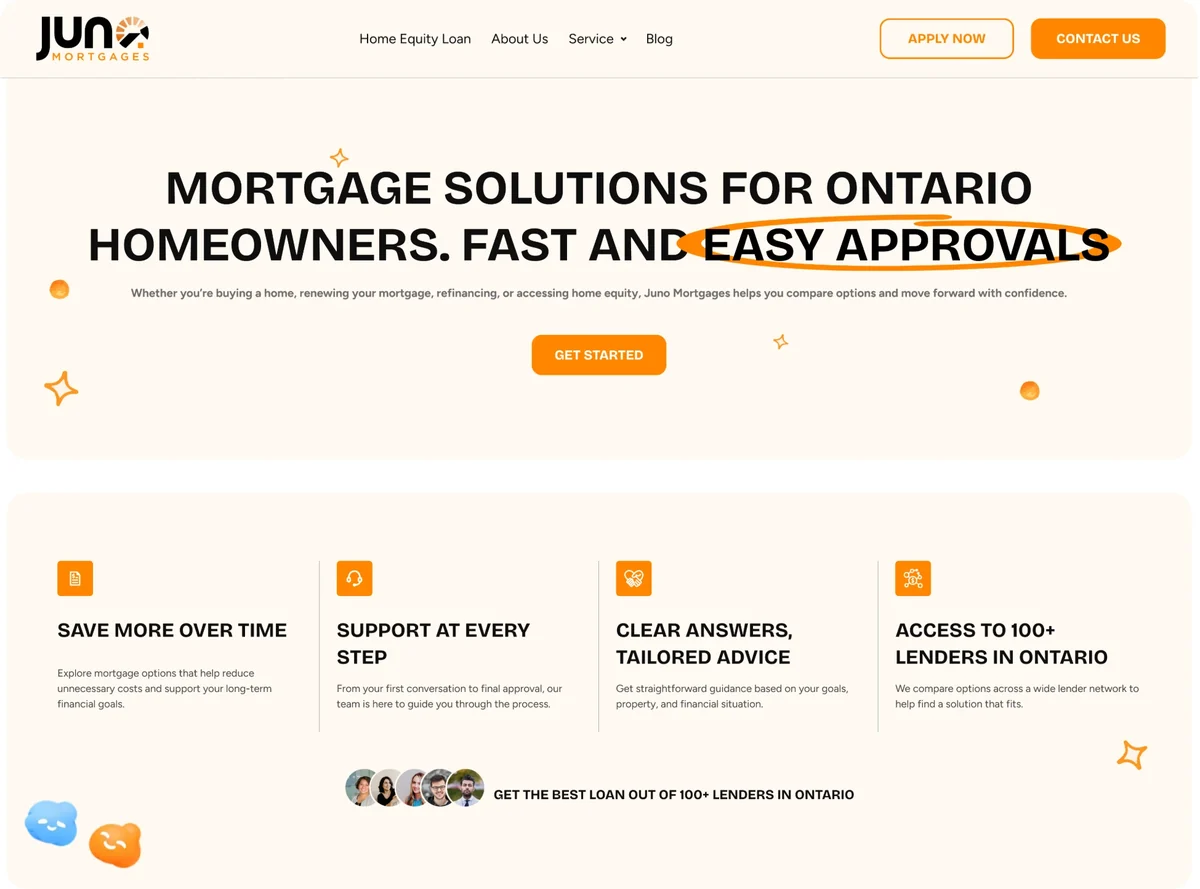
Juno Mortgages homepage, as built
WC
Brand and Website to HubSpot and CRM

Website Form to CRM

Custom forms that wrote straight into HubSpot.

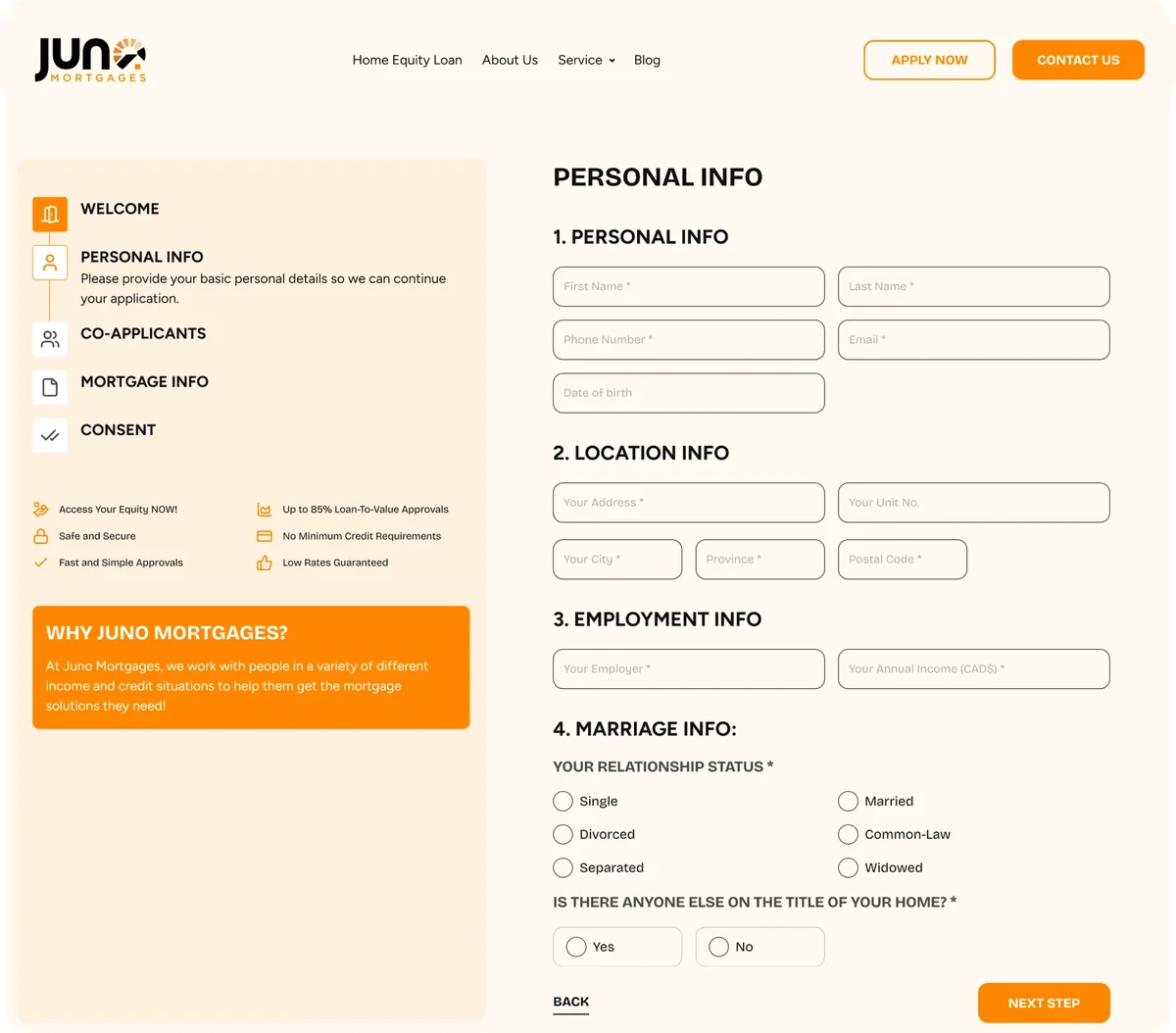
A custom-built multi-step mortgage application of up to 92 fields, with sections for co-owners, additional applicants and existing mortgages that appeared only when needed, plus an inquiry form for early conversations. Both sent every submission securely into HubSpot by API, creating a new contact or updating the existing one, so nothing was re-typed and nothing was duplicated. Automation then alerted the team, so a broker could act on each new contact right away.

Full tracking and analytics.

Eight analytics and tracking tools, set up and connected to the website and HubSpot, gave Juno a complete view of its traffic and how people used the site.

The Juno Mortgages application form, as built
C
04 · Systems

HubSpot and CRM

A CRM shaped like a mortgage file.

HubSpot, built around how Juno runs its files, to the Principal Broker’s own brief: borrower contacts, mortgage deals, custom fields, deal stages and lifecycle stages.

Zoho to HubSpot, without disruption.

All existing contacts, deals and records moved from Zoho into HubSpot while the team kept working, and phone calls started logging automatically.

Follow-up that runs on lifecycle stages.

Every new contact, from any source, gets automated email. The emails follow each contact’s lifecycle stage, so the brokers’ only job is to move the stage. HubSpot sends the rest:

  • A first response matched to what the borrower asked for, so someone trying to stop a power of sale does not get the same email as someone buying a home.
  • Follow-up when an applicant goes quiet after getting the application link, one of the most common places for a mortgage file to stall.
  • Long-term follow-up for deals that do not proceed, including renewal outreach once the maturity date is known. Nobody is written off.
The part worth knowing

The details nobody sees.

A mortgage application is not a contact form with extra rows. The address was five manual fields rather than a Google autocomplete, because autocomplete silently drops unit numbers, and a borrower record without a unit number is a record you cannot trust. The date of birth was three dropdowns in year, month, day order, because HubSpot rejects dates in any other format and the submission fails without telling the borrower. Income was stripped of commas before it posted, because a formatted number breaks a numeric CRM field.

The tracking had the same discipline. When the brokerage’s ad agency added its own conversion tracking, it went in alongside the existing setup instead of replacing it.

None of that shows on screen. All of it decides whether the record that lands in HubSpot is right, and whether the automation downstream fires on real data.

What changed

More first calls start at the mortgage.

Mortgage-ready first calls: 4 in 10, up from 3 in 10. Out of every 10 first conversations with a new applicant, 4 now go straight to the mortgage instead of basic questions about who Juno is and how the process works.

Automated follow-up: 100% of new contacts. The team moves a contact’s stage, and the right email goes out. Nobody depends on someone remembering to send it.

Source: Renat Gazoukin, Principal Broker, Juno Mortgages, October 2026.

Why the two move together. By the time a borrower picks up the phone, the website has explained how the process works, the application has arrived complete, and the borrower has already had an email matched to what they asked for.

“We’re happy with the new website. The brand and our conversations with clients have both improved. The site answers the basic questions before people call us, so 4 in 10 of our first conversations now go straight to the mortgage, up from 3 in 10. And since moving from Zoho to HubSpot, every new contact gets the right follow-up automatically. All we do is update their stage.”

Renat Gazoukin, Principal Broker, Juno Mortgages

Your first call should start at the mortgage.

Brokerage or lender, the first thing we check is the same: what happens to an inquiry after the form, and whether anyone has to remember the next step. The audit walks through your website, application, CRM and follow-up, and shows you where borrowers slip.

Get an audit